Snowpiercer (2013): Movie Review
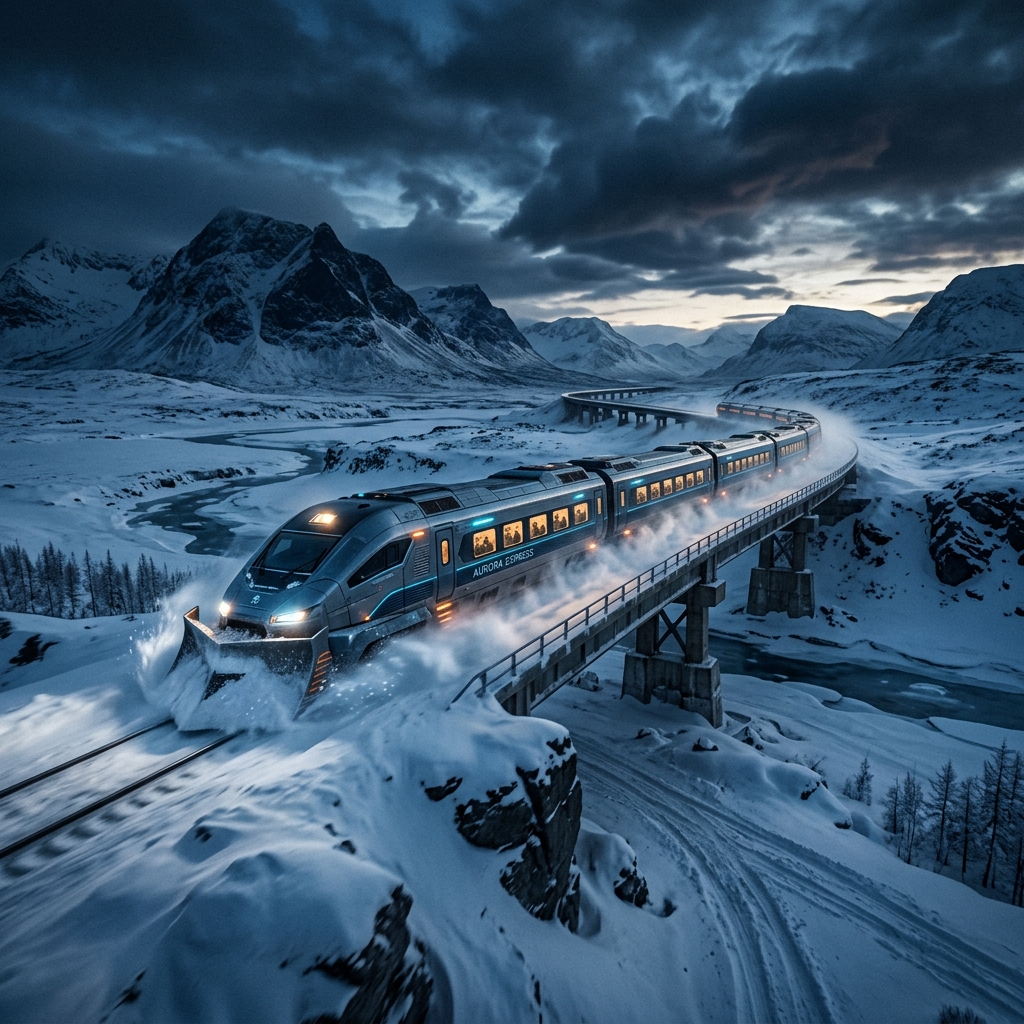
AI Image for Snowpiercer (2013)
Recently, I watched Bong Joon-ho's Snowpiercer (2013). I have watched several of his films including popular Parasite (2019), and the raw, chaotic energy of this one gripped me right from the opening act. It starts with atmospheric audio reports of planes dispersing the cooling agent CW7, setting up the ice age context before dropping us into the bleak, silent misery of the train's tail section. Curtis is introduced in this opening act, and his quiet defiance against the guards sets the tone of resistance to power.
Talking about the film: it follows Curtis leading a desperate revolt. The train is a literal class-based ecosystem where the poor are kept at the tail and the elite rule the engine. Minister Mason's speech captures this division perfectly, comparing the elite to hats on heads and the poor to shoes on feet. As the rebels push forward, Curtis faces brutal choices, like chasing the commander instead of saving his friends. Bong Joon-ho crafts the train as a mini-world, where kids are brainwashed with its revisionist history in a surreal school car, and the entire structure is kept in a delicate, closed balance of air, water, food, and population.
Unlike modern high-budget sci-fi blockbusters that rely on sterile CGI and clean action, this one feels intensely claustrophobic and dirty. The action is gritty, and the set designs feel incredibly tactile as the characters fight their way forward car by car, highlighting a theatrical, almost surreal style of characterisation. But it's the dark psychological weight that really hits. Near the end, Curtis makes a horrifying confession to the security expert, Namgoong Minsoo, about the train's early days. He confesses to killing a mother for her baby, only to be stopped when the tail section's leader, Gilliam, offered his own arm to save the child—who grew up to be Curtis's late friend, Edgar. It's a heavy, visceral moment that shifts Curtis from a simple hero to a reformed monster.
The climax upends the standard rebellion narrative. When Curtis finally reaches the engine, Wilford reveals that the entire revolt was a co-conspired population control mechanism planned with Gilliam, and even offers Curtis his position. Meanwhile, Namgoong, aided by his clairvoyant daughter Yona, has a different plan. He wasn't hoarding the drug Kronole to get high, but to blow open the external door to the outside. He noticed signs of a thaw, like a crashed airplane on a bridge becoming increasingly visible over the years.
In the end, it's a brilliant social satire on humanity's self-destructive structures. The rebellion fails to save the train, but the train itself is destroyed, leaving Yona and young Timmy as the sole survivors. After Curtis sacrifices his hand to save Timmy from the engine's gears, the kids step out into the snow to see a polar bear—a silent sign of life and a sliver of hope. It's a wild, bleak ride, and while the dark twists might not be for everyone, it's a cinematic experience that stays with you.